Dairy Cow Management: Beyond Single Metrics
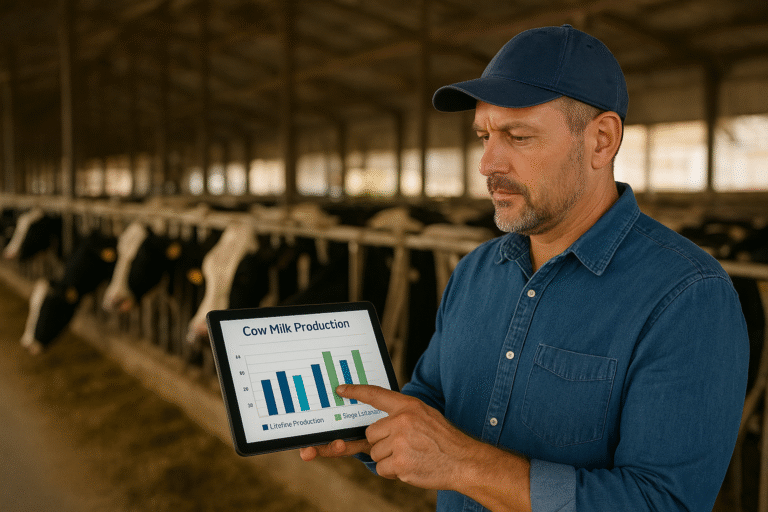
You track milk production religiously. Every test day, you review the numbers. High producers get extra attention, low producers get flagged for culling. It’s straightforward, right?
Not quite. Research shows that focusing on single metrics often masks the real story of a cow’s value to your herd. A cow might produce well but cost you thousands in veterinary bills. Another might look mediocre in snapshot data but consistently deliver profitable lactations year after year.
This is where dairy cow management evolves beyond simple production tracking into holistic herd health analysis. When you examine multiple performance indicators together, you start seeing patterns that single metrics miss entirely.
The Hidden Costs of Single-Metric Thinking
Most dairy producers focus heavily on milk production when evaluating cow performance. It makes sense on the surface. Milk is revenue, after all.
But production numbers don’t tell you about the cow who breeds back easily every year, stays healthy, and produces consistently across five lactations. They also don’t reveal the high producer who requires three services to settle, develops mastitis twice per year, and leaves your herd after her second lactation.
Research demonstrates that disease burden significantly impacts profitability beyond immediate treatment costs. Puerto et al. (2021) found that mastitis in first-lactation cows reduced cumulative milk value by $228 to $470 per cow. These hidden costs compound when you evaluate cows solely on production metrics.
Consider what happens when you rank cows purely by pounds produced. A cow producing 75 pounds daily looks better than one producing 68 pounds. But what if the 75-pound producer has had three cases of clinical mastitis, requires four services to conceive, and shows declining production across her lactation? Meanwhile, the 68-pound producer maintains a smooth lactation curve, breeds back on first service, and stays healthy.
Over a full productive life, which cow generates more profit? The answer often surprises farmers who’ve relied on production rankings alone.
What Holistic Dairy Cow Management Actually Measures
Effective dairy cow management requires examining multiple performance dimensions simultaneously. Instead of asking “How much milk did this cow produce?” you start asking “How profitably did this cow perform across all factors that matter?”
Health status plays a crucial role in long-term profitability. Rasmussen et al. (2024) conducted a global analysis of disease burden in dairy cattle, revealing that comorbidities significantly amplify economic losses. A cow with multiple health events doesn’t just accumulate individual treatment costs; the interactions between conditions create compounding losses through reduced production, increased culling risk, and compromised reproductive performance.
Reproductive efficiency matters tremendously for herd economics. Every extra service reduces profit. Every additional day open increases costs. Research on reproductive traits and economic aspects shows that breeding efficiency directly impacts farm profitability (Dos Santos et al., 2025). A cow that settles quickly maintains optimal lactation timing and reduces replacement costs across her productive life.
Lactation consistency provides insight that peak production alone cannot. Some cows spike high early in lactation then drop dramatically. Others maintain steady production across 305 days. Oliveira et al. (2019) demonstrated that genomic prediction of lactation curves helps identify cows with favorable production patterns. When you track trajectory rather than snapshots, you discover which cows truly deliver profitable lactations.
Longevity calculations reveal lifetime value. A cow producing 85 pounds daily for two lactations generates less lifetime milk than one producing 68 pounds daily for six lactations. Research shows that extending dairy cow longevity through adjusted reproduction management significantly improves both economic returns and environmental sustainability (Han et al., 2024).
Common Dairy Cow Management Mistakes
Many dairy operations fall into predictable patterns when evaluating cow performance. These aren’t failures of effort or intelligence. They’re natural consequences of focusing on readily available metrics without broader context.
Keeping high producers too long despite mounting problems is common. It’s tempting to give elite producers extra chances. After all, that cow makes 95 pounds daily. But if she’s on her fourth case of mastitis, requires intensive reproductive management, and shows declining production, she might cost more than she earns.
Consider a hypothetical scenario: A cow produces 95 pounds daily but requires $400 in additional veterinary costs annually, needs four services to conceive at $50 each, and culls after her third lactation. Compare that to a cow producing 75 pounds daily with minimal health costs, breeding back on first service, and completing five lactations. Over their respective lifetimes, which cow generated more profit?
Culling consistent performers who look mediocre in snapshots represents another common mistake. Many farmers discover cows they considered “just okay” actually deliver exceptional value when evaluated holistically. These cows might not top production charts, but they show up reliably, stay healthy, breed back efficiently, and produce profitably across multiple lactations.
Ignoring disease patterns until they become obvious creates substantial hidden losses. Subclinical conditions affect performance before clinical signs appear. Research shows that subclinical ketosis alone can reduce farm-level profitability significantly, with impacts often underestimated due to complex interactions with other conditions (Raboisson et al., 2015).
Missing the compounding effects of multiple moderate issues leads to keeping cows that quietly drain profits. A cow might have acceptable production, manageable reproductive challenges, and occasional health events. Each factor alone seems tolerable. Together, they create a pattern of underperformance that costs thousands annually.
How to Implement Holistic Herd Health Analysis
Moving from single-metric evaluation to holistic dairy cow management requires systematic data integration and consistent analysis. The process might feel overwhelming initially, but becomes routine once established.
Start by gathering comprehensive performance data for each cow. This includes production records across all lactations, health event history with dates and treatments, reproductive performance including services per conception and days open, and longevity data showing lactation numbers and age. Your dairy management software likely contains most of this information already.
Create a scoring system that weights multiple factors appropriately. Production capacity matters, but so does health, reproduction, and longevity. A typical weighting might allocate 35% to production metrics, 25% to health status, 25% to reproductive efficiency, and 15% to longevity and consistency. These percentages should reflect your operation’s specific priorities and challenges.
Calculate comprehensive scores for each cow regularly. Monthly evaluation works well for most operations. This frequency allows you to identify trends before they become major problems while avoiding the paralysis that comes from analyzing too frequently.
Compare cows within lactation groups rather than across your entire herd. A second-lactation cow producing 75 pounds daily might be excellent for her age, while the same production from a fourth-lactation cow could indicate declining performance. Age-appropriate benchmarks provide fairer comparisons.
The Financial Impact of Better Cow Rankings
When you shift from single-metric evaluation to holistic dairy cow management, the financial benefits compound across your operation. These improvements don’t come from working harder. They come from making smarter decisions based on complete information.
Reducing disease burden through better cow selection delivers immediate savings. Research demonstrates that disease costs extend far beyond treatment expenses. The hidden costs include reduced milk production, compromised reproductive performance, increased labor, and premature culling. By identifying and removing cows with chronic health challenges, farms reduce their overall disease burden significantly.
Imagine discovering that 15 cows in your herd account for 60% of your health-related costs. Each cow requires multiple veterinary interventions annually, produces below herd average following health events, and shows declining performance across lactations. If treatment and lost production costs average $600 per cow annually, these 15 animals represent $9,000 in avoidable expenses. Replacing them with healthier genetics could transform your bottom line.
Improving reproductive efficiency creates cascading benefits throughout your herd. Dos Santos et al. (2025) outline how reproductive traits directly impact farm economics through reduced breeding costs, optimal lactation spacing, and decreased involuntary culling. Cows that breed back efficiently maintain ideal production timing and reduce replacement costs.
Consider the difference between a cow requiring one service versus four services. At $50 per service, that’s $150 in additional breeding costs. Multiply this across 20 cows annually, and you’ve spent $3,000 extra on reproduction alone. But the real cost goes deeper: each additional day open reduces profitability through extended calving intervals and delayed peak production in subsequent lactations.
Extending productive lifespan through better selection dramatically improves lifetime profitability. Research shows that management decisions focused on longevity can reduce greenhouse gas emissions while improving partial net return (Han et al., 2024). The longer a cow produces profitably, the more you amortize her raising costs across productive lactations.
A cow completing five lactations generates substantially more lifetime value than one culled after two lactations, even if the shorter-lived animal had higher peak production. Raising costs, breeding expenses, and early-life investments get spread across more profitable years. For a typical operation, this might mean the difference between breaking even and generating $4,000-$6,000 in net value per cow over her lifetime.
Moving from Data to Action
Understanding holistic dairy cow management is valuable. Taking action based on that understanding creates profit. The transition from analysis to implementation requires clear decision frameworks and systematic execution.
Establish ranking thresholds that trigger specific actions. For example, cows scoring in the bottom 20% for two consecutive evaluations might become culling candidates. Those in the top 25% could receive priority for breeding decisions. Middle performers get monitored for improvement or decline. Clear thresholds remove emotion from difficult decisions.
Review your rankings monthly but avoid overreacting to short-term fluctuations. A cow experiencing a temporary health event shouldn’t be culled immediately if her historical performance is strong. Look for persistent patterns rather than isolated incidents. Consistency matters more than any single data point.
Integrate your cow rankings with breeding strategies. Your most consistent, healthy, profitable performers deserve your best genetics. These animals demonstrate the traits you want to propagate: reliable production, robust health, efficient reproduction, and longevity. Breeding them strategically builds a stronger foundation for your future herd.
Use rankings to identify cows worthy of extra management attention. Sometimes a cow in the middle tier could move up with targeted intervention. Perhaps improved nutrition during early lactation, or addressing a recurring subclinical condition, transforms her performance. Comprehensive rankings help you allocate limited time and resources where they generate the best returns.
Document your decisions and track outcomes over time. When you cull a cow based on holistic evaluation, note her score and the primary reasons for removal. Six months later, calculate what keeping her would have cost. This feedback loop sharpens your decision-making and demonstrates the value of your improved approach.
Building Your Better Herd Through Smarter Selection
Every culling decision shapes your herd’s future. Every breeding choice influences your operation’s trajectory. When you base these decisions on comprehensive evaluation rather than single metrics, you gradually build a more profitable, sustainable operation.
The transformation doesn’t happen overnight. You might identify cows for culling based on holistic rankings and feel uncertain initially. That’s normal. Trust the data and give the process time to demonstrate value.
Over multiple breeding cycles, you’ll notice patterns. Daughters of your most consistent performers tend to follow similar patterns. Health costs decline as you remove chronically problematic genetics from your herd. Reproductive efficiency improves when you prioritize cows that breed back reliably. Production becomes more consistent as you select for sustained performance rather than peak output.
This is dairy cow management evolution in action. You’re not working harder. You’re working smarter, making decisions based on complete information rather than partial snapshots. The result is a herd that produces profitably year after year, with less drama, lower health costs, and stronger genetics flowing to the next generation.
From our family to yours, we understand that every cow represents a significant investment. Every decision about keeping, culling, or breeding an animal impacts your operation’s future. Holistic herd health analysis gives you the clarity to make those decisions with confidence, knowing you’re seeing the complete picture rather than just the most obvious metrics.
Taking the Next Step
Understanding holistic dairy cow management is the first step. The next step is seeing these principles applied to your actual herd data. When you examine your cows through this comprehensive lens, you often discover surprising insights about which animals truly drive profitability and which quietly drain resources despite looking acceptable in single metrics.
Modern dairy management software can integrate production, health, reproductive, and longevity data into comprehensive cow rankings. These systems calculate scores automatically, identify patterns across lactations, and highlight cows worthy of closer attention. The technology exists to transform how you evaluate and manage your herd.
The question isn’t whether holistic evaluation provides better information. Research clearly demonstrates it does. The question is whether you’re ready to see your herd’s complete story and make decisions that build lasting profitability.
References
Puerto, M.A., Shepley, E., Cue, R.I., Warner, D., Dubuc, J., and Vasseur, E. (2021). The hidden cost of disease: I. Impact of the first incidence of mastitis on production and economic indicators of primiparous dairy cows. Journal of Dairy Science, 104(7), 7932-7943. https://www.journalofdairyscience.org/article/S0022-0302(21)00510-5/fulltext
Rasmussen, P., Barkema, H.W., Osei, P.P., Taylor, J., Shaw, A.P., Conrady, B., Chaters, G., Muñoz, V., Hall, D.C., Apenteng, O.O., Rushton, J., and Torgerson, P.R. (2024). Global losses due to dairy cattle diseases: A comorbidity-adjusted economic analysis. Journal of Dairy Science, 107(9), 6945-6970. https://www.journalofdairyscience.org/article/S0022-0302(24)00821-X/fulltext
Dos Santos, J.B., de Freitas, B.W., Obando, I.A.M., de Oliveira, N.D., Penitente-Filho, J.M., Moreira, M.V.C., Lobato, A.N., and Guimarães, J.D. (2025). Reproductive traits and economic aspects on dairy cattle. Animal Reproduction, 22(1), e20240050. https://doi.org/10.1590/1984-3143-AR2024-0050
Oliveira, H.R., Brito, L.F., Silva, F.F., Lourenco, D.A.L., Jamrozik, J., and Schenkel, F.S. (2019). Genomic prediction of lactation curves for milk, fat, protein, and somatic cell score in Holstein cattle. Journal of Dairy Science, 102(1), 452-463. https://doi.org/10.3168/jds.2018-15159
Han, R., Kok, A., Mourits, M., and Hogeveen, H. (2024). Effects of extending dairy cow longevity by adjusted reproduction management decisions on partial net return and greenhouse gas emissions: A dynamic stochastic herd simulation study. Journal of Dairy Science, 107(9), 6902-6912. https://www.sciencedirect.com/science/article/pii/S0022030224007689
Raboisson, D., Mounié, M., and Khenifar, E. (2015). The economic impact of subclinical ketosis at the farm level: Tackling the challenge of over-estimation due to multiple interactions. Preventive Veterinary Medicine, 122(4), 417-425. https://www.sciencedirect.com/science/article/abs/pii/S0167587715002615
Related Resources:
- Explore All DairyCommand Features
- Disease Burden Analysis Tool
- DairyCommand Herd Optimization Platform
About DairyCommand
From our family to yours: we’re dairy people who understand that every cow represents an investment and every decision matters. DairyCommand combines veterinary science, data analytics, and practical farm experience to help you build a more profitable, sustainable operation. Our Cow Performance Rankings tool integrates production, health, reproductive, and longevity data to reveal which animals truly drive profitability in your herd. Learn more about our comprehensive herd optimization tools at signal2action.com