The $12,000 Question Every Dairy Farmer Should Ask
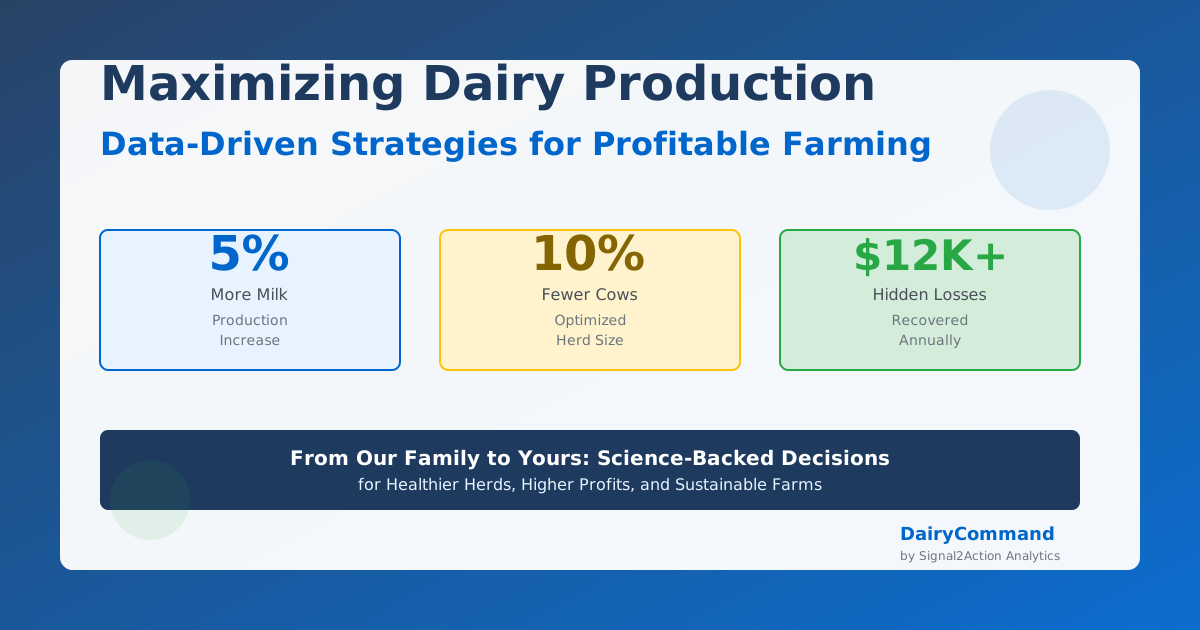
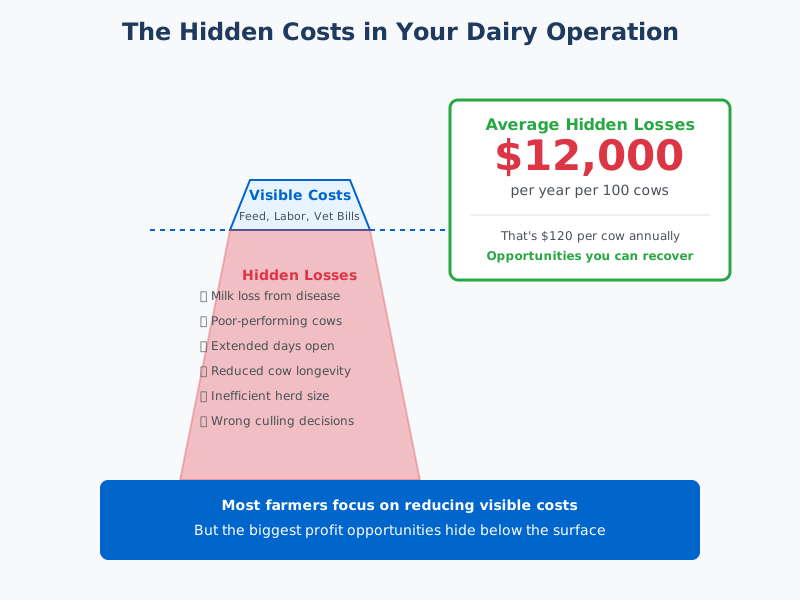
You’re doing everything right. Your cows look healthy, your vet bills are reasonable, and your milk checks keep coming. But here’s what we’ve learned working with dairy production operations across North America: most farms are leaving $12,000 or more on the table every year per 100 cows.
Not from feed costs or labor. Not from equipment or energy. These losses hide in plain sight, buried in disease impacts you can’t see and cow performance patterns you can’t track without the right tools.
If you are a farm in Ontario with 150 dairy cows, the mastitis cases could cost $18,000 annually in hidden milk losses. The cows may have looked fine, the protocols seemed solid. But when we saw the data, everything changed. Within six months of adjusting the approach, these losses dropped to nearly zero.
This guide shows you how to find and recover those hidden losses in your operation. You’ll learn how top dairy producers are using data to make smarter decisions about disease management, cow selection, and herd optimization. More importantly, you’ll see exactly how to apply these strategies to your farm.
Understanding Modern Dairy Production Economics
The Profit Leaks You Can’t See in Your Financial Records
Your accountant shows you feed costs, labor expenses, and veterinary bills. Those numbers tell you what you spent. They don’t tell you what you lost.
When a cow develops ketosis, you pay for treatment. That’s a visible cost. What doesn’t show up is the 500 pounds of milk she won’t produce over the rest of her lactation. Or the fact that she’s now 40% more likely to develop another metabolic disorder. Or that her fertility dropped, adding 20 days to her calving interval.
Research shows these indirect losses from disease significantly exceed treatment costs, often reaching thousands of dollars per case when you account for reduced lifetime milk production.
Here’s what hides below the surface:
- Milk losses from disease that extend far beyond the clinical period
- Poor-performing cows that look average until you compare them to their potential
- Extended days open costing you $3-5 per day per cow
- Reduced longevity from cows you culled too early or kept too long
- Inefficient herd size carrying more animals than needed to hit production targets
- Wrong culling decisions based on incomplete information
The farms that thrive in today’s market find these losses and fix them. The ones that struggle keep managing blindly, reacting to problems instead of preventing them.
Why Traditional Dairy Cow Production Approaches Fall Short
For decades, dairy production management followed a simple pattern. You tracked milk weights, watched for sick cows, bred anything that came into heat, and culled animals that stopped producing or got too expensive to keep.
That approach worked when milk prices were higher and input costs were lower. It doesn’t work anymore.
Traditional methods focus on snapshots: this month’s milk test, today’s somatic cell count, last week’s pregnancy check. But cows are marathons, not sprints. A cow that looks average right now might be your highest lifetime producer. A cow producing well today might be costing you money when you factor in her disease history and genetic potential.
You can’t optimize dairy farm milk production by looking at pieces. You need the complete picture.
The Three Pillars of Profitable Dairy Milk Production
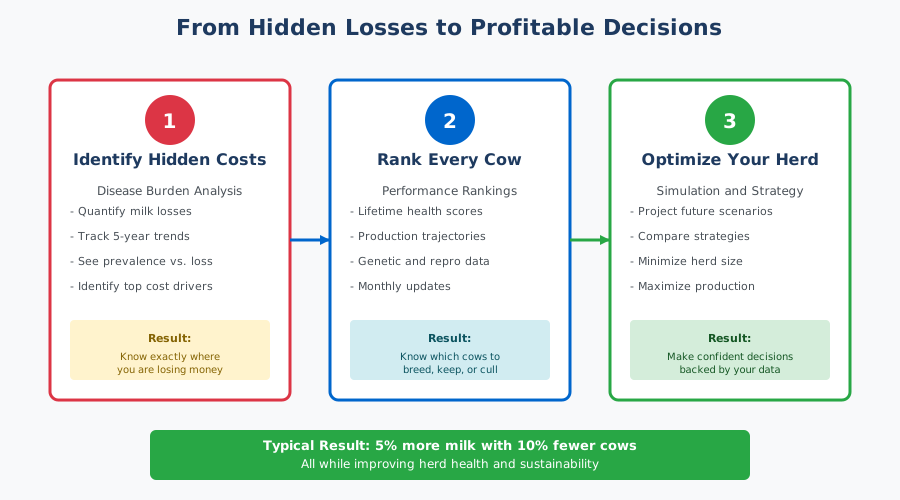
Smart dairy producers build their operations on three data-driven pillars. Each one addresses a different profit leak. Together, they transform how you manage your herd.
Pillar 1: Quantifying Disease Impact on Milk Production
You know disease costs money. But how much, exactly? Most farmers significantly underestimate the true cost because they only see treatment expenses.
Studies tracking dairy cow production across full lactations reveal that mastitis alone can reduce cumulative milk value by $228 to $470 per case annually when accounting for both direct losses and extended production deficits.
What comprehensive disease burden analysis reveals:
Your farm has a disease fingerprint. Some operations struggle with lameness, others with metabolic disorders. Each disease impacts milk production differently, and those impacts compound over time.
When you quantify the complete burden, you see:
- Which diseases cost you the most money (not which occur most often)
- Whether your prevention protocols actually work
- Where invested dollars deliver the best return
- How disease patterns changed over the past five years
One farm discovered their ketosis program reduced clinical cases by 30%. Good news, right? But when they measured milk losses, they found those losses only dropped 15%. The program helped, but not as much as they thought. They adjusted their approach and saw real improvement.
The prevalence paradox you need to understand:
Here’s something that confuses most farmers at first. Higher disease prevalence doesn’t always mean you’re doing worse. Sometimes it means you’re catching problems earlier.
If your mastitis prevalence goes up but your milk losses go down, you’ve improved. You’re finding and treating cases before they cause significant damage. Traditional tracking would make you think your mastitis problem got worse. Data-driven analysis shows you it got better.
This changes everything about how you evaluate your protocols and decide where to invest in prevention.
Pillar 2: Ranking Cows for Optimal Breeding and Culling Decisions
Every cow in your herd falls somewhere on a spectrum from profit driver to profit drain. The question is: do you know where each one sits?
Moving beyond genetic potential to actual performance:
Genetic indices tell you what a cow’s daughters might do. They don’t tell you what she’s actually doing in your barn, on your feed, with your management.
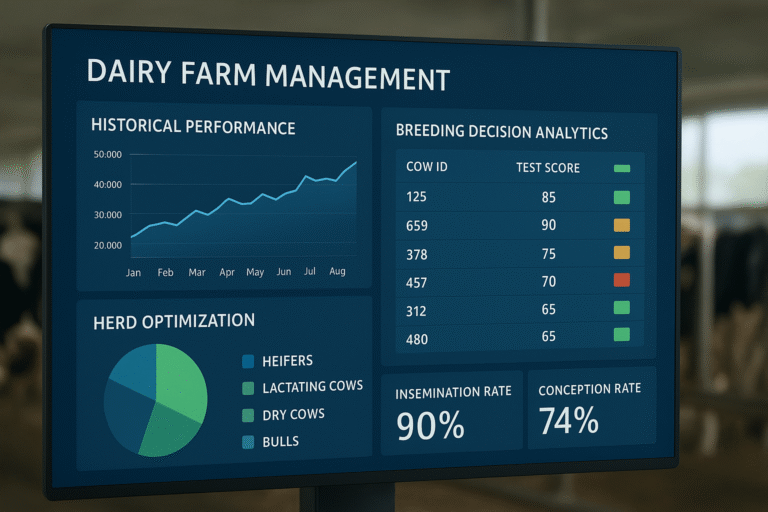
A comprehensive cow ranking system evaluates the complete picture:
- Lifetime health trajectory, not just recent events
- Actual production patterns compared to herd averages
- Genetic merit integrated with realized performance
- Reproductive efficiency and its economic impact
This creates a dynamic ranking that updates monthly as new data comes in. You know which cows earned their place through performance, which are coasting on potential, and which are quietly costing you money.
The trajectory insight that changes breeding strategy:
When you analyze cow performance across entire lifetimes, patterns emerge. Some cows start slow but finish strong. Others peak early and decline rapidly. Traditional snapshot evaluations miss these patterns entirely.
Trajectory analysis shows you which young cows to invest in through breeding and which to move out before they disappoint. It identifies older cows with more productive years ahead and those who’ve already given their best.
This matters tremendously for breeding decisions. Breeding a cow costs money and commits you to keeping her for at least another lactation. Make that choice based on incomplete data and you’re gambling with your profit margin.
Finding market opportunities in underperformers:
Here’s a strategy most farmers miss: not every underperformer in your herd needs to go to beef.
A cow ranking bottom 25% in your high-producing herd might rank top 50% in a different operation with different goals, different facilities, or different management. Sell her as a dairy animal while she still has value, and you capture hundreds more dollars than you would at cull weight.
The ranking system identifies these opportunities, showing you which cows to market strategically rather than just sending to slaughter.
Pillar 3: Optimizing Herd Size and Composition Through Simulation
Most dairy operations carry more cows than needed to hit their production targets. Not by accident, by habit. The herd grew gradually over years, and nobody ever asked: what’s the optimal number?
Why simulation beats trial-and-error:
You can’t experiment with your herd composition in real-time. Cull 20 animals to test a theory and you might be stuck with the results for years. Make the wrong breeding decisions and you don’t know until those heifers freshen 2-3 years from now.
Herd simulation uses five years of your historical data to show what would have happened if you’d made different decisions. It reveals:
- Which breeding criteria maximize future productivity
- Which culling strategies reduce herd size without reducing output
- How disease management improvements compound over time
- What your herd could look like in 3-5 years under different scenarios
One farm running simulations discovered they could produce 5% more milk with 8% fewer cows by adjusting which animals they bred and which they culled. Those aren’t theoretical numbers—they’re based entirely on that farm’s actual data and performance.
Here’s what simulation shows most clearly: where your intuition leads you wrong.
The gap between your decisions and optimal decisions:
Maybe you’re breeding cows with lower health scores because you want to give them a chance. The algorithm shows those decisions cost you 1.5% in production over five years.
Or you’re culling cows in early lactation because they had a health event. Simulation reveals many would have recovered to become above-average producers.
These aren’t criticisms. They’re opportunities. Every farm has decision patterns that made sense based on available information but don’t hold up under complete data analysis. Finding those gaps means finding money.
Understanding the biological timeline:
Optimizing your dairy farm milk production through better breeding and culling decisions doesn’t happen overnight. It takes time because you’re working with biology.
Short-term (12-24 months), you’ll see improvements from better culling decisions and disease management. Medium-term (2-4 years), you’ll see the first generation of strategically selected replacements entering production. Long-term (5+ years), multiple generations of optimized selection compound into substantial herd improvement.
Farms starting with fewer high-quality animals take longer to reach optimization. If your current herd lacks strong performers to build from, you’ll need to invest in better genetics earlier in the process. The simulation tools help you plan that investment strategically.
Implementing Data-Driven Dairy Production on Your Farm
Getting Started: What You Need
The barrier to data-driven dairy management isn’t technology or cost. It’s having clean, complete records to analyze.
Data requirements:
- Five years of production records (milk weights, components)
- Health event recording (diseases, treatments)
- Reproductive data (breedings, pregnancy checks)
- Genetic information where available
Most farms running DC305 or similar herd management software already have this data. The question is whether it’s recorded consistently and accurately.
Talk to your veterinarian about your record-keeping quality. They usually know which farms maintain excellent data and which have gaps.
The Complete Workflow: From Analysis to Action
Here’s how progressive dairy farms are using integrated data analysis to drive real improvements:
Step 1: Run a comprehensive herd analysis (initial assessment)
Start with a complete picture of where you are now. This means analyzing disease burden, ranking every cow, and running initial herd simulations.
The disease burden analysis shows you where money’s leaking. Maybe mastitis costs you $15,000 annually, while lameness is only $4,000. That tells you where to focus first.
The cow rankings identify your stars and your drags. You’ll likely be surprised by some results. Cows you thought were solid performers might rank middle-of-the-pack when you factor in their complete history.
The herd simulation reveals optimization opportunities. You might learn you could hit the same production targets with 12 fewer cows if you adjusted your culling criteria slightly.
Step 2: Develop your strategy with your veterinarian (collaborative planning)
This isn’t something to do alone. Your vet brings clinical expertise, you bring operational knowledge, and the data brings objective evidence.
Sit down together and ask:
- Which disease interventions deliver the best ROI?
- Which breeding and culling decisions need adjustment?
- What’s realistic to implement in the next 6-12 months?
- How do we measure success?
The strategy should balance what the data recommends with what’s practical on your farm. Maybe the algorithm says to breed different cows, but you know your facilities limit which animals you can house. Factor that in.
Your veterinarian can expand their role here beyond traditional clinical services. Instead of just treating sick cows, they become your strategic partner in herd optimization. That’s more valuable to you and more satisfying for them.
Step 3: Implement changes gradually (practical execution)
Don’t try to transform your entire operation overnight. Make changes in phases:
Immediate (First 30 days):
- Adjust culling criteria for bottom-ranked animals
- Update breeding lists based on cow rankings
- Focus disease prevention on highest-cost conditions
Short-term (3-6 months):
- Test modified disease protocols
- Track whether changes reduce milk losses
- Refine breeding and culling decisions based on monthly ranking updates
Medium-term (12-24 months):
- Evaluate first-generation results from adjusted breeding strategy
- Measure herd composition changes against simulation projections
- Assess whether disease burden improved as expected
Step 4: Monitor and adjust (continuous improvement)
Every six months, rerun your disease burden analysis. Did that new mastitis protocol work? The data will tell you definitively.
Your cow rankings update monthly automatically, giving you current guidance for breeding and culling decisions.
Annually, rerun the herd optimization simulation. See how your actual decisions compared to the algorithm’s recommendations. Identify where you’re making progress and where gaps remain.
This creates a continuous improvement cycle: analyze, plan, implement, measure, adjust.
Working With Your Veterinarian as a Strategic Partner
The relationship between farmers and veterinarians is changing. Smart operations recognize that vets offer more value as strategic advisors than just clinical service providers.
How veterinarians add value in data-driven dairy production:
Your vet can help interpret disease burden reports, explaining why certain conditions cost more than others and which interventions make clinical sense for your situation.
They can review cow rankings with you, identifying health patterns in your low performers and confirming which animals are legitimately at the end of their productive life versus which might benefit from treatment.
They can help you understand simulation results, translating algorithmic recommendations into practical breeding and culling strategies that work in your barn.
Many veterinarians are building new consulting services around these tools, offering regular data review sessions, protocol optimization services, and strategic herd planning. This benefits both of you: you get better decision support, they build a more sustainable practice model.
Real-World Results: What to Expect
Let’s be clear about timelines and outcomes. This isn’t magic, it’s methodology applied consistently over time.
What farms typically see:
First 6 months:
- Identify $10,000-$20,000 in hidden annual losses
- Make more confident culling decisions based on complete data
- Adjust 1-2 disease protocols based on actual cost-benefit analysis
- Begin implementing optimized breeding strategy
Year 1-2:
- Reduce disease-related milk losses by 10-25% through targeted interventions
- Improve average cow rankings as low performers exit and high performers breed
- Begin trending toward optimized herd size (typically 5-10% reduction possible)
- Increase average production per cow by 1-3%
Years 3-5:
- See compound effects of better breeding decisions (first generation of optimized genetics producing)
- Achieve or approach optimal herd composition shown in simulations
- Realize 5%+ production gains with meaningfully smaller herd
- Build genetic resilience and reduce future disease burden
One important caveat: farms starting with fewer high-quality animals need longer to reach full optimization. You can’t breed superior replacements from inferior cows overnight. This might require strategic investment in better genetics earlier in the process.
The tool tells you where you stand and what’s possible. How quickly you get there depends on your starting point and how aggressively you implement.
Advanced Strategies for Maximizing Dairy Cow Production
Integrating Health, Genetics, and Production Data
The real power comes from analyzing these factors together, not separately.
A cow might have excellent genetic merit but poor health scores. Do you breed her? Depends on what her health issues are, whether they’re hereditary, and how they’ve impacted her actual production.
Another cow might have average genetics but exceptional lifetime production and minimal health events. She’s disease-resistant and thriving in your environment. That’s exactly what you want to breed.
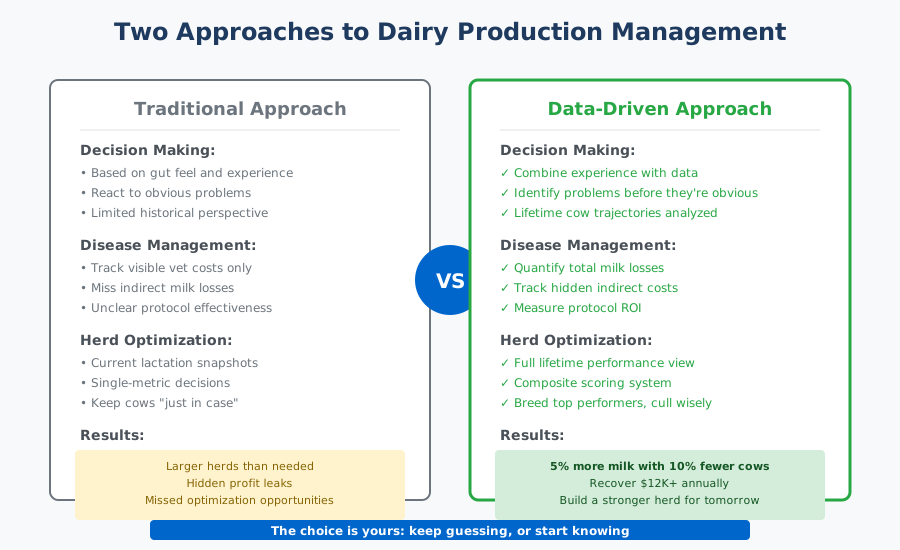
Traditional approaches evaluate these factors in isolation. Genetic indices get calculated by breed associations without considering individual health history. Health records sit in your computer without informing breeding decisions. Production records get reviewed without context about what diseases interrupted that lactation.
The Cow Performance Score approach:
A comprehensive scoring system integrates all these factors into a single, actionable metric for each cow. It weighs:
- Complete disease history across her lifetime
- Recovery patterns and resilience to health challenges
- Genetic merit and its actual expression in your barn
- Reproductive efficiency and its economic impact
- Production trajectory compared to herd averages
This creates rankings you can actually use. Top-ranked cows earn breeding with premium genetics. Middle-tier animals might get bred with beef semen or less expensive dairy semen. Bottom-tier cows become culling candidates, marketed strategically while they retain value.
Optimizing for Butterfat Production Specifically
For Canadian farms operating under butterfat quota systems, production optimization requires a different lens than pure volume.
You’re not trying to maximize total milk. You’re trying to maximize butterfat production within your quota while minimizing input costs.
This changes your breeding strategy significantly. A cow producing 30,000 pounds at 3.5% fat delivers less butterfat quota than a cow producing 25,000 pounds at 4.2% fat. The second cow also eats less and takes up less space.
Simulation tools can model butterfat-specific scenarios:
- Which cows deliver the best butterfat per unit of feed consumed
- How herd composition changes when you breed for components over volume
- Whether reducing herd size while selecting for higher-fat animals improves profitability
- What your optimal herd size looks like under current quota prices
Many farms discover they’re carrying too many high-volume, low-component cows. Shifting toward fewer, higher-component animals improves quota efficiency dramatically.
Disease-Specific Optimization Strategies
Not all diseases impact production equally. Your optimization strategy should prioritize conditions based on their actual economic impact in your herd, not their prevalence.
Mastitis optimization:
Research demonstrates that mastitis impacts extend far beyond the clinical period, with significant reductions in lifetime milk production even after successful treatment (Puerto et al., 2021).
Focus on:
- Early detection to minimize milk loss
- Culling chronic cases that never fully recover
- Breeding for genetic resistance in replacement animals
- Measuring whether your protocols reduce total milk lost, not just case incidence
Metabolic disease management:
Ketosis, milk fever, and displaced abomasum create cascading effects that reduce productivity for entire lactations.
Your strategy should:
- Identify which cows are metabolically fragile based on history
- Adjust transition management for high-risk animals
- Consider earlier culling of cows with repeated metabolic issues
- Measure total lactation impact, not just treatment costs
Lameness prevention:
Studies show lameness significantly impacts dairy production economics through reduced milk yield, decreased reproductive performance, and increased culling risk (Bruijnis et al., 2010).
Effective approaches include:
- Tracking locomotion scores consistently
- Identifying facility and management factors contributing to lameness
- Culling chronically lame animals rather than repeatedly treating
- Selecting for foot health in breeding decisions
Building Resilience for the Next Generation
The decisions you make today determine what herd you’re milking five years from now. This matters tremendously if you’re planning to pass your operation to the next generation.
Genetic selection for longevity and resilience:
Stop breeding only for production. Select for cows that:
- Resist disease and recover quickly when challenged
- Maintain body condition across lactations
- Breed back efficiently without extensive intervention
- Stay sound and productive into later lactations
These traits compound over generations. Your daughter or son inherits a herd that’s easier to manage, more profitable to operate, and more sustainable long-term.
Environmental sustainability through efficiency:
Producing more milk with fewer cows isn’t just good economics, it’s better for the environment.
Fewer animals means:
- Less methane production per unit of milk
- Reduced feed requirements and land use
- Lower water consumption
- Decreased manure management challenges
Optimization strategies that reduce herd size while maintaining production help you meet emerging sustainability requirements while improving profitability. That’s a win for your operation and for the industry’s social license.
Common Pitfalls to Avoid
Pitfall 1: Focusing Only on Top-Line Milk Production
Maximum milk volume doesn’t equal maximum profit. Feed costs, labor requirements, facility capacity, and disease burden all factor into profitability.
A 100-cow herd producing 2.5 million pounds might be more profitable than a 110-cow herd producing 2.6 million pounds if the smaller herd has better health, lower input costs, and higher components.
Optimize for profit per cow and total farm profitability, not just volume.
Pitfall 2: Making Breeding Decisions Based Only on Genetics
Genetic indices predict offspring quality. They don’t tell you whether the cow standing in front of you is profitable to breed.
A cow with excellent genetic merit but chronic health problems shouldn’t be bred, regardless of her TPI or LPI. A cow with average genetics but exceptional lifetime production and perfect health is exactly what you want more of.
Integrate genetics with actual performance, health history, and reproductive efficiency.
Pitfall 3: Culling Based on Recent Events Rather Than Lifetime Value
A cow developing mastitis in early lactation might still become an above-average producer over that lactation. Culling her immediately based on the health event alone could be the wrong choice.
Conversely, a cow producing well right now might be chronically diseased, reproductively challenged, and unlikely to make it to another lactation. Keeping her too long costs money.
Evaluate lifetime trajectories and future potential, not just current situations.
Pitfall 4: Expecting Instant Results
Herd optimization follows biological timelines. You’re breeding animals that won’t freshen for 2-3 years. You’re making culling decisions whose full impact won’t be visible for 1-2 years.
Set realistic expectations:
- Immediate improvements in decision confidence and strategic clarity
- Short-term gains from better disease management and culling
- Medium-term progress as herd composition shifts
- Long-term results as genetics and management changes compound
Farms that stick with data-driven approaches for 3-5 years see transformational results. Those expecting overnight miracles get disappointed and quit.
Pitfall 5: Replacing Farmer Knowledge with Algorithms
Data doesn’t replace your expertise, it enhances it. You know your cows, your facilities, your markets, and your goals better than any algorithm.
The tools show you patterns in your data you couldn’t see otherwise. They quantify impacts that were previously invisible. They simulate scenarios you couldn’t test in real-time.
But you make the final decisions, factoring in context the data doesn’t capture. A cow might rank low algorithmically but have characteristics you value for other reasons. Trust your judgment, informed by better information.
Taking Action: Your Path to Optimized Dairy Production
The First Step: Comprehensive Herd Analysis
Most farms have no idea where they’re losing money or which optimization opportunities exist. The first step is finding out.
A comprehensive herd analysis includes:
- Complete disease burden quantification showing what each condition really costs
- Individual cow rankings identifying your stars and your drags
- Herd optimization simulation revealing what’s possible with better decisions
This baseline assessment shows you exactly where you are and what’s realistic to achieve. Some farms discover massive opportunities (one farm found $28,000 in hidden annual losses). Others find they’re doing better than expected but still have room for strategic improvement.
Either way, you’ll know exactly where to focus your efforts for maximum return.
Working With DairyCommand: Your Complete Optimization Platform
We built DairyCommand because we’ve seen too many farming families work incredibly hard while invisible losses quietly drain their profitability.
From our family to yours, we understand what you’re up against. We know you’re already making smart decisions with the information you have. We’re giving you information nobody else can provide.
Our three integrated tools work together:
Disease Burden Analysis quantifies hidden milk losses from each disease, tracks whether your protocols work, and shows you where prevention dollars deliver the best return. Updated every six months, it tells you if you’re actually improving or just hoping you are.
Cow Performance Rankings evaluate every animal across her complete lifetime, combining health history, production trajectories, genetics, and reproduction into a single actionable score. Updated monthly, it guides your breeding and culling decisions with confidence.
Herd Optimization Simulation uses five years of your data to show what’s possible with better decisions, identifies gaps between your choices and optimal choices, and projects your herd composition under different management strategies.
These aren’t separate tools that require separate decisions. They work together, creating a complete picture of your operation and a clear path to improvement.
Schedule Your Comprehensive Herd Analysis Today
Ready to find out what’s possible for your operation?
We’ll analyze your complete herd using all three tools, show you exactly where opportunities exist, and give you a clear roadmap for improvement. This includes:
✓ Complete disease burden report with 5-year trends and cost quantification
✓ Individual cow rankings for every animal in your herd
✓ Herd optimization simulation showing realistic improvement scenarios
✓ Strategy session with both you and your veterinarian
✓ Clear action plan for the next 6-12 months
[Schedule your comprehensive herd analysis now →]
The farms that thrive in today’s market make decisions based on complete information. The ones that struggle keep guessing, hoping next year will be better.
You’ve worked too hard to keep losing money to invisible leaks. Let’s find them together and fix them.
Frequently Asked Questions
How much improvement should I realistically expect?
A farm could identify $10,000-$20,000 per 100 cows in hidden annual losses during their first analysis. Over 2-3 years of implementing optimized strategies, typical operations see 1-3% production increases with 5-10% herd size reductions. Some farms with significant optimization opportunities achieve 5%+ production gains with larger herd size reductions.
Your specific results depend on your starting point and how aggressively you implement recommended changes.
Do I need to replace my current herd management software?
No. DairyCommand works with your existing DC305 or DairyComp data. We analyze the records you’re already keeping, we don’t require you to learn new software or change your daily workflows.
How often do I need to run these analyses?
Disease burden analysis should be done every 6 months to track protocol effectiveness. Cow rankings update monthly automatically as new data comes in. Herd optimization simulations are typically run annually to assess progress and adjust strategy.
What if my records aren’t perfect?
We need reasonably complete data for accurate analysis (five years of production, health, and reproductive records). Most farms using modern herd management software have this, though some have gaps that need to be addressed.
Your veterinarian can assess your data quality and recommend record-keeping improvements if needed before analysis.
Can this help with quota management for Canadian farms?
Absolutely. The optimization tools can model butterfat-specific scenarios, helping you maximize quota efficiency by selecting for component production rather than just volume. Many Canadian farms use this to reduce herd size while maintaining or increasing butterfat production.
How does this work with my veterinarian?
We strongly recommend including your veterinarian in the analysis and strategy development process. They bring clinical expertise that complements the data insights, and they can help implement recommended protocols on your farm.
Many veterinarians are expanding their practices to include data-driven consulting services. This creates value for both of you.
What about organic or grazing operations?
The analytical approach works for any dairy production system. Disease impacts and cow performance patterns exist regardless of management style. The optimization strategies can be adapted to your specific goals, whether that’s maximizing milk production efficiency, or butterfat content in the milk.
Is this only for large herds?
No. While larger operations generate more absolute dollars of improvement, the percentage gains apply across herd sizes. A 50-cow farm losing $6,000 annually to hidden losses benefits just as much proportionally as a 200-cow farm losing $24,000.
The analytical tools work with herds of any size as long as sufficient historical data exists.
From Our Family to Yours: A Commitment to Sustainable Dairy Farming
We didn’t build DairyCommand to sell software. We built it because we care deeply about the families who produce our food and the animals who make that possible.
As a veterinarian and animal welfare scientist, I’ve spent decades working with dairy farms, treating sick cows, and helping operations improve their management. I’ve seen firsthand how invisible losses quietly drain profitability from farms that are doing everything else right.
As a data scientist and statistician, I’ve seen how powerful analytics can reveal patterns that no amount of experience alone can detect. I’ve watched as complex data transforms into clear, actionable insights that drive real improvement.
Together, we raised our child with deep respect for farmers and the work you do. We wanted to create tools that honor your expertise while giving you information you couldn’t get any other way.
The Three-Way Collaboration
This isn’t about replacing your knowledge with computers. It’s about combining your experience with data-driven insights to make the best possible decisions for your operation and your future.
Every farm we work with is different. Your challenges, goals, and constraints are unique. But the fundamental principle is the same: you can’t optimize what you can’t measure, and you can’t fix problems you can’t see. Your veterinarian can be your strategic partner in creating strategic plans based on the insights from the data.
We’re here to help you see clearly, decide confidently, and build a more profitable, sustainable operation for the next generation.
From our family to yours: let’s make your dairy operation the best it can be.
Ready to start? [Schedule your comprehensive herd analysis now →]
References
Bruijnis, M. R., Hogeveen, H., & Stassen, E. N. (2010). Assessing economic consequences of foot disorders in dairy cattle using a dynamic stochastic simulation model. Journal of dairy science, 93(6), 2419–2432. https://pubmed.ncbi.nlm.nih.gov/20494150/
Puerto, M.A., Shepley, E., Cue, R.I., Warner, D., Dubuc, J., and Vasseur, E. (2021). The hidden cost of disease: I. Impact of the first incidence of mastitis on production and economic indicators of primiparous dairy cows. Journal of Dairy Science, 104(7), 7932-7943. https://www.journalofdairyscience.org/article/S0022-0302(21)00510-5/fulltext
Rasmussen, P., Barkema, H. W., Osei, P. P., Taylor, J., Shaw, A. P., Conrady, B., Chaters, G., Muñoz, V., Hall, D. C., Apenteng, O. O., Rushton, J., & Torgerson, P. R. (2024). Global losses due to dairy cattle diseases: A comorbidity-adjusted economic analysis. Journal of dairy science, 107(9), 6945–6970. https://doi.org/10.3168/jds.2023-24626