Introduction
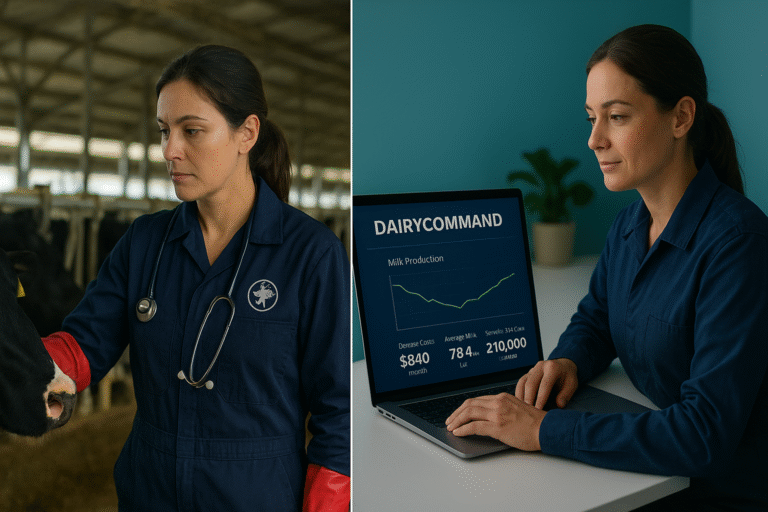
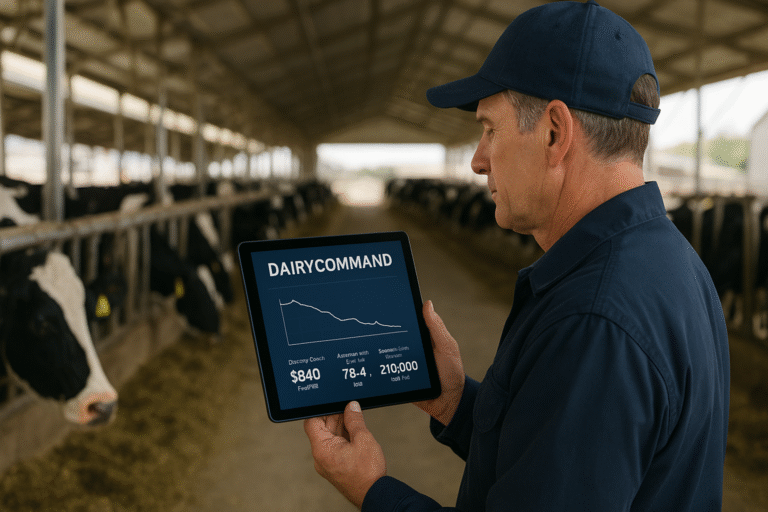
Most dairy operations track milk production data religiously. Test day records, daily yields, component percentages, the numbers are all there. But here’s what these data hides from the eyesight of veterinarians and farmers: traditional milk production systems only show you half the story.
Recent research reveals that subclinical diseases alone cost dairy operations between $2,000 and $20,000 annually per condition, yet these losses rarely appear in standard milk analysis reports (Rasmussen et al., 2024). The milk that was never produced, the lactations that never reached their potential, the cows that left the herd too early, these invisible losses drain profitability while remaining completely hidden in conventional data tracking.
In this article, we’ll explore how modern dairy analytics transforms raw milk production data into actionable insights that reveal the true economic impact of herd health decisions. You’ll discover why lifetime-based analysis outperforms snapshot evaluations, how to quantify losses that never show up in financial records, and what cutting-edge research tells us about optimizing herd performance through better data interpretation.
Why Traditional Milk Production Systems Miss the Bigger Picture
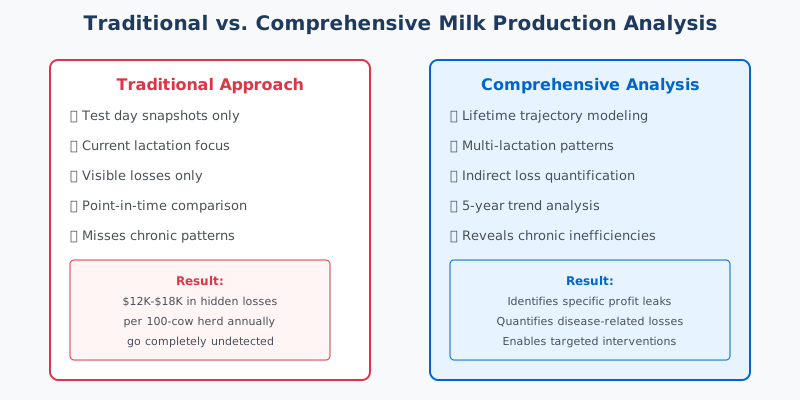
Your current milk production system likely tracks individual test days, generates lactation curves, and flags cows that fall below certain thresholds. These are valuable tools, but they operate like taking a photograph when you need a movie.
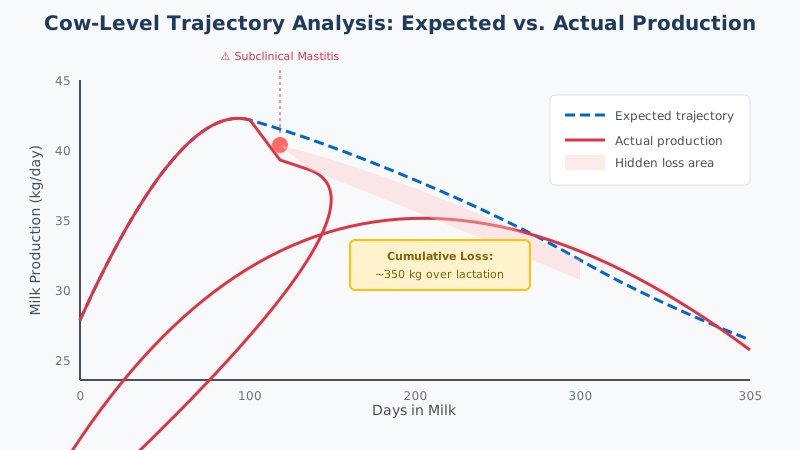
Consider a cow that experiences subclinical mastitis in early lactation. Traditional data tracking shows a dip in production during the acute phase, maybe a few days of discarded milk. What it doesn’t show is the 200-400 kg of milk that cow will never produce across the remainder of that lactation (Puerto et al., 2021). The immediate loss is visible. The extended production deficit? Invisible.
This limitation isn’t a flaw in the data itself. The information exists in your records. The problem is how traditional dairy herd management approaches analyze and interpret that information. Most systems compare individual cows to herd averages at specific points in time, but they don’t model what each cow’s lifetime production trajectory should have been without disease interference.
The Lactation-Long Impact Problem
Recent dairy analytics research has revolutionized our understanding of disease economics. When Puerto and colleagues analyzed the hidden costs of mastitis in primiparous cows, they found that the cumulative milk value loss ranged from $228 to $470 per case when accounting for the entire lactation impact, not just the acute phase (Puerto et al., 2021).
Here’s what that means for your herd: if you’re only tracking visible losses, you’re missing 60-75% of the actual economic impact. For a 100-cow herd experiencing typical disease prevalence, that translates to $15,000-$25,000 in annual losses that never appear in your financial analysis.
Traditional milk analysis captures the acute events. Comprehensive dairy analytics reveals the chronic burden. The difference between these approaches determines whether you’re managing symptoms or optimizing profitability.
The Science Behind Lifetime Milk Production Data Analysis
Modern approaches to milk production data leverage statistical modeling techniques that were simply unavailable to the dairy industry until recently. These methods don’t just track what happened, they infer what should have happened in the absence of health events, then quantify the difference.
Trajectory Modeling vs. Snapshot Comparison
Traditional dairy herd management compares each cow’s current production to herd averages. A cow producing 35 kg/day in a herd averaging 32 kg/day looks good. Problem solved, right?
Not necessarily. What if that cow’s genetic potential and early lactation trajectory suggested she should be producing 38 kg/day? What if she experienced subclinical ketosis that you treated successfully, but the production deficit persists? Snapshot comparison misses this entirely because you’re comparing her to the herd average, not to her own potential.
Advanced milk production systems use Bayesian statistical methods to model each cow’s expected trajectory based on:
- Genetic indices and pedigree information
- Parity and days in milk
- Historical performance across previous lactations
- Seasonal and environmental factors
- Reproductive and health event timing
By establishing what each cow should produce under optimal conditions, these systems quantify the gap between potential and reality. That gap represents your hidden opportunity cost.
Multi-Lactation Pattern Recognition
A single lactation tells you what happened. Multiple lactations reveal patterns that predict future performance and identify chronic issues.
Research examining lameness impact on dairy cow productivity found that cows with repeated lameness events showed progressively worse production deficits with each subsequent lactation, even when lameness was successfully treated between lactations (Cha et al., 2010). This cumulative burden only becomes visible when you analyze lifetime milk production data across multiple reproductive cycles.
This is where modern dairy analytics separates itself from traditional approaches. By tracking health events, reproductive performance, and production metrics across an animal’s entire productive life, these systems identify:
- Cows with disease resilience (high production despite health challenges)
- Animals with chronic subclinical conditions that never fully resolve
- Optimal culling decisions based on lifetime profitability, not current snapshot
- Genetic lines that combine production potential with health robustness
For veterinarians, this means your intervention effectiveness can now be measured not just by clinical resolution, but by long-term production recovery. Did that mastitis treatment protocol actually return the cow to her expected trajectory, or did you just resolve the clinical signs while the economic impact persisted?
Quantifying What’s Never Recorded: The Indirect Loss Challenge
The most sophisticated aspect of modern milk production data analysis isn’t tracking what happened. It’s quantifying what didn’t happen.
The Hidden Cost Methodology
Traditional financial analysis on dairy operations captures direct costs: medication, veterinary fees, discarded milk, treatment time. These are tangible expenses that appear in your records. But research consistently shows that indirect costs dwarf direct costs for most dairy diseases.
A comprehensive analysis of global disease burden in dairy cattle found that for conditions like mastitis, lameness, and metabolic disorders, indirect losses typically represent 70-85% of total economic impact (Rasmussen et al., 2024). These indirect losses include:
- Reduced milk production during subclinical phases
- Extended lactation-long production deficits after clinical recovery
- Increased culling risk and reduced productive life
- Impaired reproductive performance
- Decreased milk quality and component percentages
Here’s the challenge: none of these losses generate an invoice. They don’t appear in your accounting software. A cow that produces 32 kg/day instead of her potential 36 kg/day just looks like an average producer, not a profit leak.
Advanced dairy herd management systems address this by using statistical modeling to estimate each cow’s production potential, then attributing deviations from that potential to specific health events when temporal relationships exist. This isn’t guesswork, it’s rigorous epidemiological analysis applied to your farm’s actual data.
The Prevalence vs. Impact Distinction
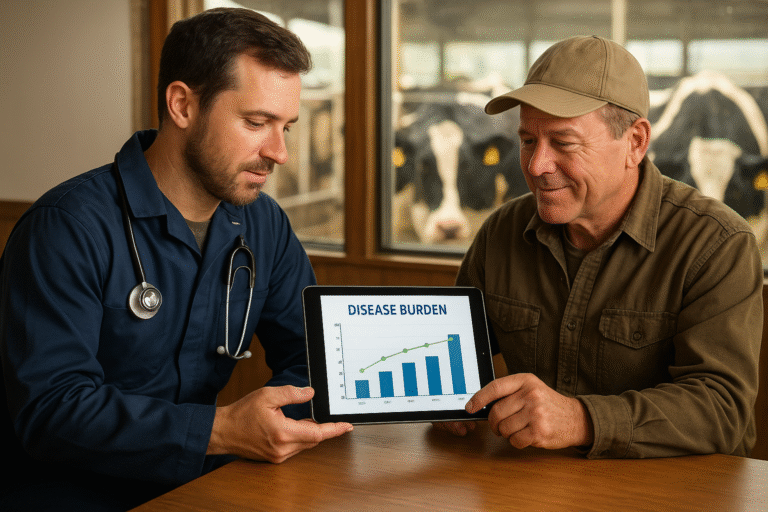
One of the most valuable insights from comprehensive milk analysis is understanding the relationship between disease prevalence and economic burden. Higher disease detection doesn’t always mean worse disease management.
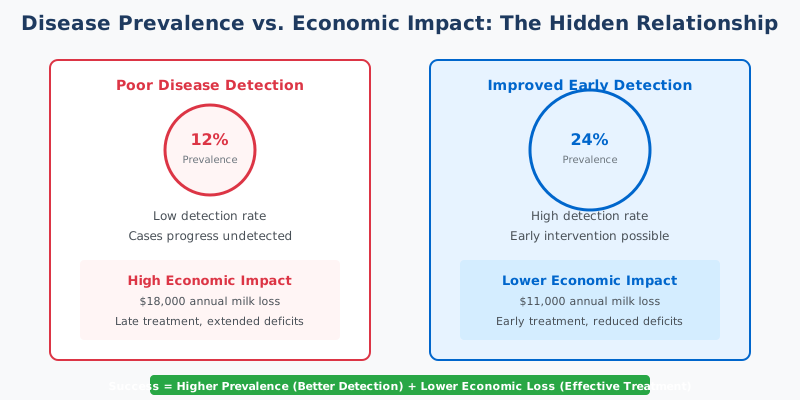
Consider this scenario: Your dairy implements improved early detection protocols for subclinical ketosis. Disease prevalence increases from 15% to 22% because you’re now identifying cases you previously missed. Traditional interpretation? Your ketosis problem got worse.
But when you analyze milk production data comprehensively, you might discover that despite higher prevalence, total milk losses from ketosis actually decreased by 30%. Why? Because earlier detection enabled faster intervention, reducing the duration and severity of production impacts. The disease is still present, but its economic burden declined.
This is the prevalence vs. milk loss relationship that changes how you evaluate intervention effectiveness. Successful disease management often increases apparent prevalence (through better detection) while decreasing actual economic impact. Traditional milk production systems can’t distinguish between these scenarios. Comprehensive dairy analytics reveals the truth.
Transforming Milk Production Data Into Strategic Decisions
Data without action is just numbers on a screen. The real value of comprehensive milk analysis comes when it informs specific management decisions that improve profitability.
Breeding and Culling Optimization
Traditional approaches to culling decisions rely heavily on current production levels and reproductive status. A cow producing below herd average gets flagged for culling. But this snapshot approach misses critical context.
Comprehensive dairy analytics considers:
- Lifetime production trajectory, not just current yield
- Disease resilience based on historical health events
- Genetic value for future herd improvement
- Production potential remaining in current lactation
- Economic value compared to replacement cost
When you analyze milk production data this way, you often discover that some apparently “low-producing” cows actually have higher lifetime profitability than flashier herdmates. The cow producing 30 kg/day with zero health events and excellent reproductive efficiency might be more valuable than the 38 kg/day cow with chronic subclinical issues and poor fertility.
For breeding decisions, lifetime milk production data reveals which genetic lines combine production potential with health robustness. This goes beyond traditional genetic indices, which predict potential but don’t account for how reliably animals achieve that potential under real farm conditions.
Protocol Effectiveness Monitoring
Veterinarians implement disease prevention and treatment protocols based on scientific evidence and clinical experience. But how do you know if those protocols actually work on a specific farm?
Traditional monitoring tracks disease incidence and clinical outcomes. A mastitis prevention protocol that reduces clinical cases from 35% to 28% looks successful. But comprehensive milk production data might reveal that while clinical incidence decreased, subclinical prevalence increased, and total milk losses remained unchanged. The protocol shifted the disease pattern but didn’t improve the economics.
Modern dairy herd management systems enable true protocol effectiveness assessment by tracking:
- Disease-specific milk production losses before and after intervention
- Lactation-long recovery patterns following treatment
- Changes in lifetime production trajectories for animals receiving different protocols
- Cost-benefit analysis including indirect economic impacts
This transforms veterinary consulting from reactive treatment to proactive economic optimization. You’re no longer just treating sick cows, you’re documenting and optimizing the ROI of every intervention.
Herd Composition Strategy
The optimal herd isn’t the one with the highest peak production. It’s the one with the best combination of production efficiency, health robustness, and economic sustainability.
Comprehensive analysis of milk production data often reveals opportunities to improve profitability by reducing herd size while maintaining or increasing total milk output. Our research via simulations has demonstrated that farms can typically achieve 5% higher milk production with 10% fewer animals when culling decisions are optimized using lifetime profitability metrics rather than snapshot production levels.
This approach benefits from identifying:
- High-efficiency animals that consistently exceed production potential
- Problem animals with chronic subclinical issues that drag down herd performance
- Genetic lines that thrive in your specific management system
- Optimal replacement timing based on projected future performance
For farm sustainability, this matters tremendously. Producing the same milk with fewer cows reduces feed costs, labor requirements, manure management challenges, and environmental impact while improving per-cow economics and potentially qualifying for premium sustainability programs.
Implementing Advanced Dairy Analytics in Your Operation
Understanding the science behind comprehensive milk production data analysis is valuable. Knowing how to actually implement it in your operation is essential.
Data Quality Requirements
Sophisticated analytics require sophisticated data. Not necessarily more data, but better data. The key requirements include:
- Consistent recording practices. Health events, reproductive interventions, and management changes must be recorded accurately and consistently. Missing data creates blind spots that undermine analysis accuracy.
- Comprehensive health event tracking. Record both clinical and subclinical disease events. That subclinical ketosis case you treated without clinical signs? It needs to be in your records for accurate milk loss attribution.
- Complete lactation histories. Single-lactation snapshots miss the patterns that comprehensive analysis reveals. Ideally, maintain 3-5 years of historical data for each animal.
- Integration across data sources. Milk production data, DHI testing results, health records, and reproductive information should all connect to the same cow ID. Siloed data systems prevent comprehensive analysis.
- Most modern dairy operations already collect all this information. The challenge isn’t data collection—it’s data integration and interpretation.
- Choosing the Right Analytical Approach
- Not all farms need the same level of analytical sophistication. A 50-cow operation with excellent health management might not benefit from complex trajectory modeling. A 500-cow operation with inconsistent performance absolutely will.
Consider your operation’s readiness:
You’re ready for advanced analytics if:
- You have 2+ years of consistent health and production records
- Disease management inconsistencies exist but causes are unclear
- Culling decisions feel like guesswork despite good record-keeping
- You want to validate intervention effectiveness with objective data
- You’re interested in optimizing herd composition for efficiency
You should focus on basic improvements first if:
- Health event recording is inconsistent or incomplete
- You lack historical data beyond current lactation
- Basic herd management protocols aren’t yet standardized
- You’re still working on establishing consistent testing schedules
The goal isn’t to implement the most sophisticated system possible. It’s to match analytical complexity to your operation’s readiness and goals.
Working with Veterinary Partners
For veterinarians, comprehensive milk production data analysis represents an opportunity to expand your value proposition from reactive treatment to strategic consulting.
This transition requires:
- Structured data review sessions. Schedule bi-annual reviews of disease burden analysis and protocol effectiveness with your dairy clients. These aren’t casual conversations—they’re billable consulting sessions with documented economic value.
- Evidence-based protocol development. Use milk production data to design and validate custom health management protocols for each operation. Generic recommendations give way to farm-specific strategies proven effective through objective data.
- Performance benchmarking. Help clients understand their position relative to progressive industry targets, not just their own historical performance. This creates motivation for improvement while setting realistic expectations.
- ROI documentation. Quantify the economic value of your interventions. When a new mastitis prevention protocol reduces annual milk losses by $12,000, that documented impact strengthens client relationships and justifies premium consulting fees.
- This evolution from treatment provider to economic advisor requires new skills, but the dairy industry increasingly demands and values this level of expertise.
The Future of Milk Production Data in Dairy Management
Technology continues advancing, and the future of dairy analytics promises even more sophisticated insights.
Predictive Analytics and Early Warning Systems
Current systems primarily quantify past performance. Emerging approaches use machine learning algorithms to predict future risks based on early warning indicators in milk production data.
These systems analyze subtle changes in production patterns, component ratios, and behavioral data to flag animals at high risk for metabolic disorders, mastitis, or reproductive failure, often days or weeks before clinical signs appear. Early intervention potential multiplies when you can identify problems before they become clinically apparent.
Integration with Precision Dairy Technologies
Milk production data becomes exponentially more valuable when integrated with other precision dairy technologies: automated activity monitors, rumination sensors, body condition scoring systems, and inline milk analyzers.
The convergence of these data streams enables real-time health monitoring and automated alert systems. A cow showing declining milk production combined with reduced rumination and changed activity patterns triggers immediate investigation, potentially preventing disease progression that would otherwise go unnoticed for days.
Sustainability Metrics and Carbon Footprint
Environmental sustainability increasingly influences dairy economics through both regulatory requirements and market premiums. Comprehensive milk production data plays a central role in quantifying and optimizing environmental efficiency.
Feed efficiency, methane intensity per kilogram of milk, and overall carbon footprint can all be calculated from detailed production and health records. Farms that optimize these metrics through data-driven management gain competitive advantages in an increasingly sustainability-focused marketplace.
Conclusion
Milk production data has always been central to dairy herd management. But the difference between traditional snapshot analysis and comprehensive lifetime analytics is the difference between treating symptoms and optimizing profitability.
When you analyze milk production data across entire lactations, account for indirect losses that never generate invoices, and model what each animal should produce under optimal conditions, you transform raw numbers into strategic insights. You stop reacting to visible problems and start preventing invisible profit leaks.
For veterinarians, this represents an evolution in professional value. You’re no longer just treating disease—you’re documenting economic impact, validating intervention effectiveness, and positioning yourself as an essential partner in farm profitability. For farmers, comprehensive dairy analytics means making breeding and culling decisions based on lifetime profitability rather than snapshot performance.
The farms that embrace this level of analytical sophistication will separate themselves from competitors in an industry where profit margins are tight and every efficiency gain matters. The question isn’t whether to adopt these approaches. It’s whether you can afford not to.
Ready to discover what your milk production data reveals about hidden profit opportunities? Schedule a comprehensive herd analysis to see exactly where disease burden, suboptimal genetics, and management inefficiencies are costing your operation thousands annually.
References
Cha, E., Hertl, J.A., Bar, D., and Gröhn, Y.T. (2010). The cost of different types of lameness in dairy cows calculated by dynamic programming. Preventive Veterinary Medicine, 97(1), 1-8. https://www.sciencedirect.com/science/article/abs/pii/S0167587710002102
Puerto, M. A., Shepley, E., Cue, R. I., Warner, D., Dubuc, J., & Vasseur, E. (2021). The hidden cost of disease: I. Impact of the first incidence of mastitis on production and economic indicators of primiparous dairy cows. Journal of dairy science, 104(7), 7932–7943. https://doi.org/10.3168/jds.2020-19584
Rasmussen, P., Barkema, H. W., Osei, P. P., Taylor, J., Shaw, A. P., Conrady, B., Chaters, G., Muñoz, V., Hall, D. C., Apenteng, O. O., Rushton, J., & Torgerson, P. R. (2024). Global losses due to dairy cattle diseases: A comorbidity-adjusted economic analysis. Journal of dairy science, 107(9), 6945–6970. https://doi.org/10.3168/jds.2023-24626